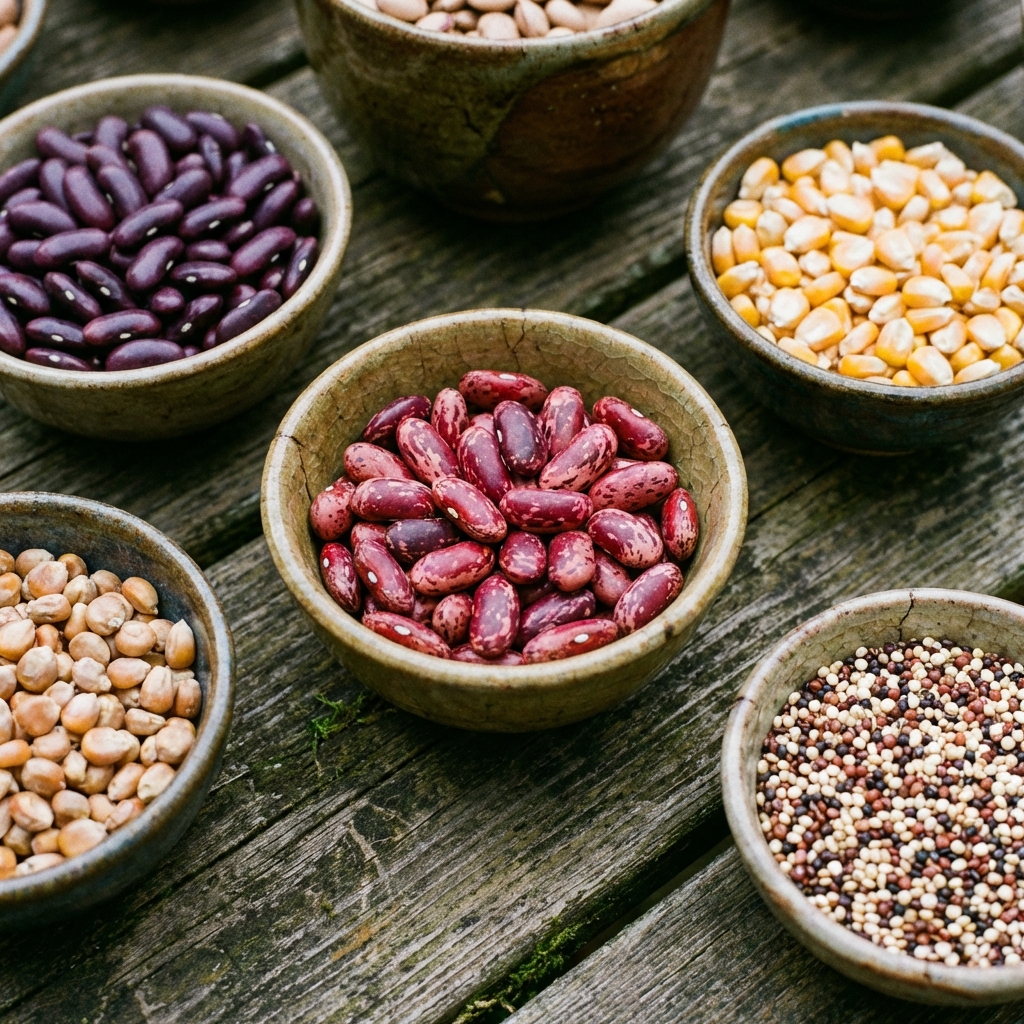
Protecting genetic diversity in our crops for a resilient food future: why open-pollinated legacy seeds prevent crop loss from climate shifts.
1. The Loss of Biodiversity in Modern Food
In the last century, industrial agriculture has discarded over 75% of vegetable varieties in favor of patented F1 hybrid seeds designed solely for shelf-life parameters and mechanised harvesting. Supermarkets display uniform round red tomatoes that carry zero aromatic flavor and low vitamin density. By relying on a tiny pool of genetic options, our global food supply is highly vulnerable to pest infestations and severe climate changes.
2. Understanding Heirloom and Open-Pollinated Seeds
Heirloom seeds are open-pollinated crop varieties that have been passed down through generations of gardeners and farmers for at least fifty years. Unlike patented hybrid seeds, heirloom seeds breed true, meaning the seeds saved from this year's harvest will produce plants with the exact same traits next year. These seeds retain genetic memories of surviving cold snaps, droughts, and local insect populations over decades, making them naturally resilient.
3. Culinary Heritage and Complex Flavor Profiles
Heirloom crops carry deep, complex flavors. From the rich acidity of Cherokee Purple tomatoes to the sweet earthiness of French heirloom carrots, these varieties contain diverse sugar and acid balances that modern hybrids lack. Lemon Tree Grocer works with seed-saving collectives to ensure these historical varieties remain a staple on local dinner tables.
4. Securing Food Autonomy for the Future
True farming independence requires seed autonomy. When corporations control seed intellectual properties, farmers must repurchase seeds every single season. Saving heirloom seeds restores ownership back to small-scale growers. We actively support regional seed libraries, guaranteeing that our Valley retains control of its agricultural heritage for generations to come.