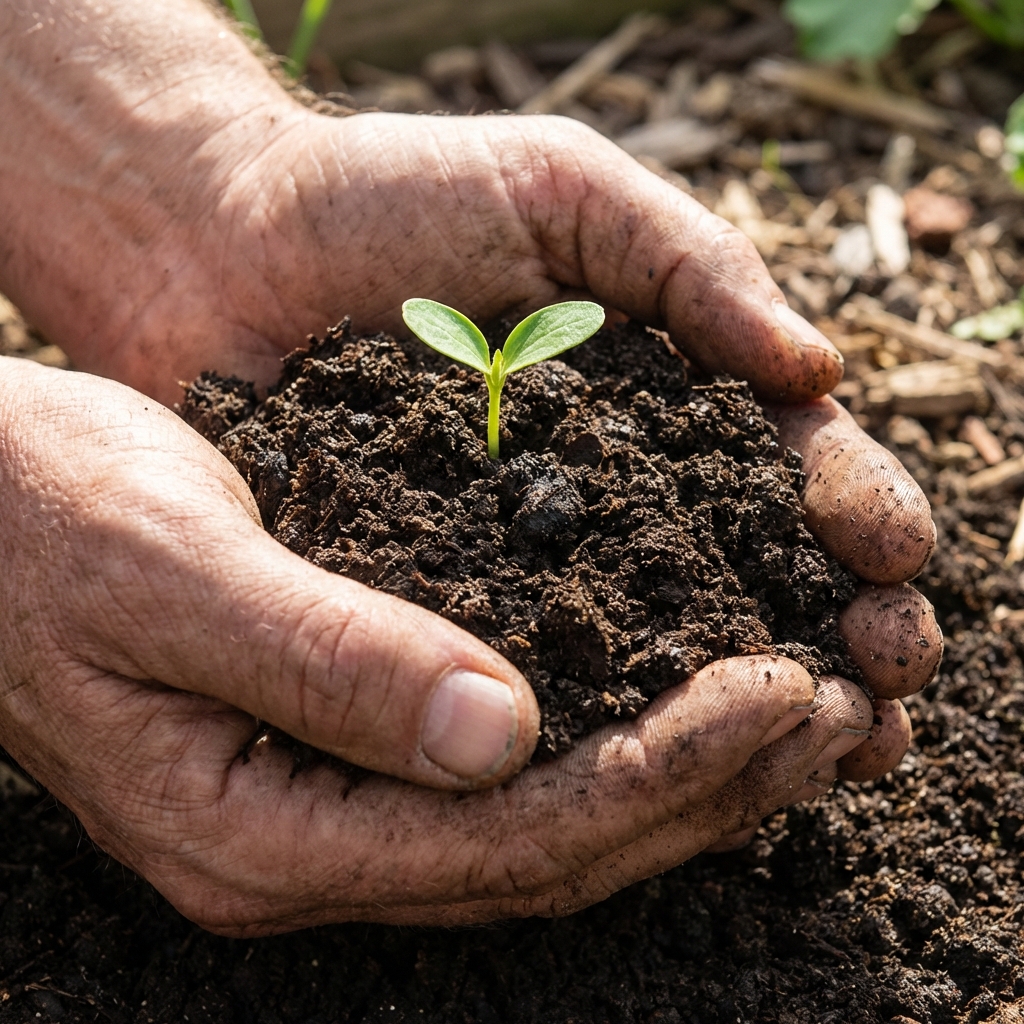
The complex biological machine beneath our feet and why regenerative agriculture requires building living dirt instead of feeding plants synthetic additives.
1. The Rhizosphere: A Subterranean Market
Healthy soil is not a passive medium; it is a complex web of life. In one gram of forest soil, there are over a billion bacteria, thousands of fungal strands, and millions of protozoa. This biological cluster operates in the 'Rhizosphere'—the narrow zone surrounding plant roots. Here, plants trade carbon sugars generated during photosynthesis in exchange for rock nutrients, minerals, and defense enzymes harvested by fungal networks. This natural trade system is the key to crop health.
2. Why Chemical Fertilizers are Toxic to Soil
When industrial farms pour synthetic nitrogen (NPK) onto crops, they bypass this subterranean trade. The plant receives direct nutrition, but stops feeding the soil biology. As a result, fungal strands decay, bacteria die, and the soil loses its natural structure, turning into fine dirt. Without biology to bind it, this dirt is easily washed away during rainstorms, causing massive erosion. Lemon Tree Grocer works only with farmers who nourish soil micro-organisms using compost tea, cover crops, and minimum tillage practices.
3. Carbon Storage and Climate Solutions
Living soil acts as a massive carbon sink. The organic material (humus) created by decaying roots and fungal activity stores carbon in deep bedrock layers for centuries. Regenerative agriculture is one of the most effective methods to reclaim atmospheric carbon, storing it inside the land. Every purchase of our regenerative produce supports carbon sequestration projects throughout local Valley farms.
4. The Taste of True Soil Humus
When soil biology operates optimally, plants absorb secondary metabolites that determine complex flavors. A tomato grown in living humus carries sweet, acid, and earthy notes that artificial hydroponic mediums cannot reproduce. Healthy soil makes delicious food. We prioritize soil audits, proving that soil health directly dictates the vitality of our local ecosystem.